

NLSUI OPAC header image
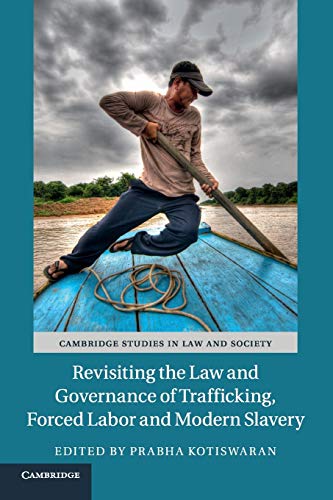
Amazon cover image
Image from Amazon.com

Revisiting the law and governance of trafficking, forced labor and modern slavery / edited by Prabha Kotiswaran, King's College London.

Contributor(s): Series: Cambridge studies in law and societyPublisher: Cambridge, United kingdom ; New York, NY, USA : Cambridge University Press, 2017Description: xvii, 581 pages ; 24 cmContent type:
  • text
ISBN:
  • 9781316613610 (paperback)
Subject(s): DDC classification:
  • 345.02551 23
LOC classification:
  • K5297 .R48 2017
Contents:
Machine generated contents note: Introduction. From sex panic to extreme exploitation: revisiting the law of 'human trafficking' Prabha Kotiswaran; Part I. Revisiting the Text and Context of Article 3: 1. Trafficked and exploited: the urgent need for coherence in international law Michael Dottridge; 2. The international legal definition 'trafficking in persons': scope and application Anne T. Gallagher; 3. Contemporary debt bondage, 'self-exploitation' and the limits of the trafficking definition Janie A. Chuang; 4. Subjectivity of coercion: workers' experiences with trafficking in the United States Denise Brennan; Part II. Anti-Trafficking Law: A Legal Realist Critique: 5. The right to locomotion? Trafficking, slavery and the state Julia O'Connell Davidson; 6. Anti-trafficking and the new indenture Janet Halley; 7. Immigration controls and 'modern-day slavery' Chantal Thomas; 8. Representing, counting, valuing: managing definitional uncertainty in the law of trafficking Kerry Rittich; Part III. Trafficking and New Forms of Governance: 9. Counting the uncountable: constructing trafficking through measurement Sally Engle Merry; 10. Addressing HIV/AIDS at the intersection of anti-trafficking and health law and policy Aziza Ahmed; 11. Brokered subjects and sexual investability Elizabeth Bernstein; Part IV. New Directions in Anti-Trafficking Law: The Rule of the ILO: 12. Raising the bar: the adoption of new ILO standards against forced labour Beate Andrees and Amanda Aikman; 13. Trafficking and forced labour: filling in the gaps with the adoption of the supplementary ILO standards, 2014 Lee Swepston; 14. Combating labor exploitation in the global economy: the need for a differentiated approach Robert Plant; 15. Human trafficking and forced labor: should companies be liable? Zuzanna Muskat-Gorska; Part V. Rethinking Trafficking through Migration Policy: 16. The paradox of 'legality': temporary migrant worker programs and vulnerability to trafficking Hila Shamir; 17. The indentured mobility of migrant domestic workers: the case of Dubai Rhacel Salazar Parrenas and Rachel Silvey; 18. Migrants, unfree labour, and the legal construction of domestic servitude: migrant domestic workers in the UK Judy Fudge and Kendra Strauss.
Summary: "Trafficking typically involves the movement of persons for exploitation for a third party's benefit. Inspired by the Palermo protocols, several states today criminalize trafficking, and it is perceived as an issue of serious organized crime. This edited volume brings together academics, activists and officials from international organizations who believe that the choice of a criminal law response arose from a particular alignment of geo-political interests of developed countries in the wake of globalization. Adopting an inter-disciplinary, multi-stakeholder approach, contributors to this volume instead understand trafficking through the lens of labor migration and extreme exploitation and consequently rethink both the law and governance of trafficking. This volume considers many key factors, including the evolving international law on trafficking, the relationship between trafficking and domestic migration law and policy, as well as newly emergent techniques of governance including indicators, with a view to exploring prospects for economic justice in a globalized world"-- Provided by publisher.Summary: "Trafficking typically involves the movement of persons for exploitation for a third party's benefit. Inspired by the Palermo Protocol, several states today criminalize trafficking and it is perceived as an issue of serious organized crime. This edited volume brings together academics, activists and officials from international organizations who believe that the choice of a criminal law response arose from a particular alignment of geo-political interests of developed countries in the wake of globalization. Adopting an inter-disciplinary, multi-stakeholder approach, contributors to this volume instead understand trafficking through the lens of labor migration and extreme exploitation and, consequently, rethink both the law and governance of trafficking. This volume considers many key factors, including the evolving international law on trafficking, the relationship between trafficking and domestic migration law and policy as well as newly emergent techniques of governance, including indicators, with a view to exploring prospects for economic justice in a globalized world"-- Provided by publisher.
Star ratings
    Average rating: 0.0 (0 votes)
Holdings
Item type Current library Shelving location Call number Materials specified Status Notes Barcode
BOOKs NLS General Stacks 345.02551 KOT (Browse shelf(Opens below)) PB Available Recommended by Prof. Kamala Sankaran 39605

Includes bibliographical references and index.

Machine generated contents note: Introduction. From sex panic to extreme exploitation: revisiting the law of 'human trafficking' Prabha Kotiswaran; Part I. Revisiting the Text and Context of Article 3: 1. Trafficked and exploited: the urgent need for coherence in international law Michael Dottridge; 2. The international legal definition 'trafficking in persons': scope and application Anne T. Gallagher; 3. Contemporary debt bondage, 'self-exploitation' and the limits of the trafficking definition Janie A. Chuang; 4. Subjectivity of coercion: workers' experiences with trafficking in the United States Denise Brennan; Part II. Anti-Trafficking Law: A Legal Realist Critique: 5. The right to locomotion? Trafficking, slavery and the state Julia O'Connell Davidson; 6. Anti-trafficking and the new indenture Janet Halley; 7. Immigration controls and 'modern-day slavery' Chantal Thomas; 8. Representing, counting, valuing: managing definitional uncertainty in the law of trafficking Kerry Rittich; Part III. Trafficking and New Forms of Governance: 9. Counting the uncountable: constructing trafficking through measurement Sally Engle Merry; 10. Addressing HIV/AIDS at the intersection of anti-trafficking and health law and policy Aziza Ahmed; 11. Brokered subjects and sexual investability Elizabeth Bernstein; Part IV. New Directions in Anti-Trafficking Law: The Rule of the ILO: 12. Raising the bar: the adoption of new ILO standards against forced labour Beate Andrees and Amanda Aikman; 13. Trafficking and forced labour: filling in the gaps with the adoption of the supplementary ILO standards, 2014 Lee Swepston; 14. Combating labor exploitation in the global economy: the need for a differentiated approach Robert Plant; 15. Human trafficking and forced labor: should companies be liable? Zuzanna Muskat-Gorska; Part V. Rethinking Trafficking through Migration Policy: 16. The paradox of 'legality': temporary migrant worker programs and vulnerability to trafficking Hila Shamir; 17. The indentured mobility of migrant domestic workers: the case of Dubai Rhacel Salazar Parrenas and Rachel Silvey; 18. Migrants, unfree labour, and the legal construction of domestic servitude: migrant domestic workers in the UK Judy Fudge and Kendra Strauss.

"Trafficking typically involves the movement of persons for exploitation for a third party's benefit. Inspired by the Palermo protocols, several states today criminalize trafficking, and it is perceived as an issue of serious organized crime. This edited volume brings together academics, activists and officials from international organizations who believe that the choice of a criminal law response arose from a particular alignment of geo-political interests of developed countries in the wake of globalization. Adopting an inter-disciplinary, multi-stakeholder approach, contributors to this volume instead understand trafficking through the lens of labor migration and extreme exploitation and consequently rethink both the law and governance of trafficking. This volume considers many key factors, including the evolving international law on trafficking, the relationship between trafficking and domestic migration law and policy, as well as newly emergent techniques of governance including indicators, with a view to exploring prospects for economic justice in a globalized world"-- Provided by publisher.

"Trafficking typically involves the movement of persons for exploitation for a third party's benefit. Inspired by the Palermo Protocol, several states today criminalize trafficking and it is perceived as an issue of serious organized crime. This edited volume brings together academics, activists and officials from international organizations who believe that the choice of a criminal law response arose from a particular alignment of geo-political interests of developed countries in the wake of globalization. Adopting an inter-disciplinary, multi-stakeholder approach, contributors to this volume instead understand trafficking through the lens of labor migration and extreme exploitation and, consequently, rethink both the law and governance of trafficking. This volume considers many key factors, including the evolving international law on trafficking, the relationship between trafficking and domestic migration law and policy as well as newly emergent techniques of governance, including indicators, with a view to exploring prospects for economic justice in a globalized world"-- Provided by publisher.