
Library Catalogue
| Item type | Current library | Shelving location | Call number | Materials specified | Status | Notes | Barcode | |
|---|---|---|---|---|---|---|---|---|
 BOOKs
BOOKs
|
NLS | General Stacks | 303.954 ACE (Browse shelf(Opens below)) | HB | Available | Recommended by Prof. Dr. Arun K Thiruvengadam | 39610 |
Preface;
Note on Non-English Terms;
Acronyms;
Chronology;
Copyright Permissions;
Supreme Court Benches;
Introduction;
1. The Setting;
2. The Counterprotests;
3. The Case;
4. The Scandal;
5. The Rule;
6. The Protests;
Conclusion;
Acknowledgements;
Appendix A: A Note on Interdisciplinary Interventions;
Appendix B: Legal Materials;
Notes;
Bibliography;
Index.
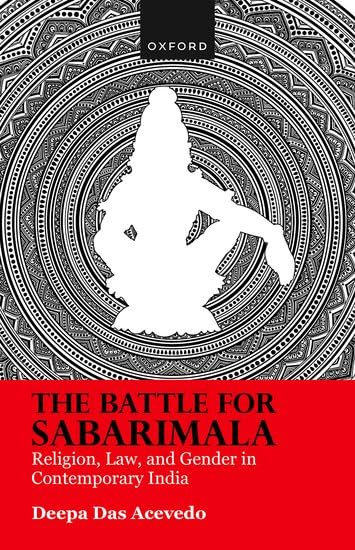
The Battle for Sabarimala tells the story of one of contemporary India's most contentious disputes—a long running struggle over women's access to the Hindu temple at Sabarimala. In 2018, the Indian Supreme Court ruled that the temple, which had traditionally excluded women aged ten to fifty because their presence offended the presiding deity, had to open its doors to all Hindus. The decision in Indian Young Lawyers Association (IYLA) rocked the nation. Protests were launched around India, and throughout the diaspora, a record-setting human chain called the 'Women's Wall' was coordinated, and dozens of petitions were filed asking the Supreme Court to reverse its landmark opinion. Most significantly, the IYLA opinion led the Court to openly reconsider the Essential Practices Doctrine that has been a mainstay of Indian religious freedom jurisprudence since 1954.
In this monograph-length study of the dispute, legal anthropologist Deepa Das Acevedo draws on ethnographic fieldwork, legal analysis, and media archives to tell a multifaceted narrative about the 'ban on women'. Reaching as far back as the eighteenth century, when the relationship between temple deities and the government was transformed by an ambitious precolonial ruler, and coming up to the litigation delays caused by the coronavirus pandemic, Das Acevedo reveals the complexities of the dispute and the constitutional framework that defines it. That framework, Das Acevedo argues, reflects two distinct conceptions of religion-state relations, both of which have emerged at various stages in the—still unresolved—battle for Sabarimala.