

Library Catalogue
| Item type | Current library | Shelving location | Call number | Materials specified | Status | Notes | Barcode | |
|---|---|---|---|---|---|---|---|---|
 BOOKs
BOOKs
|
NLS | Circulation Counter | 304.80954 AGA-2 (Browse shelf(Opens below)) | PB | Available | Recommended by. Dr. Anindita Adhikari | 40894 | |
|
BOOKs
|
NLS | General Stacks | 304.80954 AGA (Browse shelf(Opens below)) | PB | Available | Recommended by Dr. Anindita Adhikari | 40154 |

|

|

|

|

|

|
No cover image available | ||
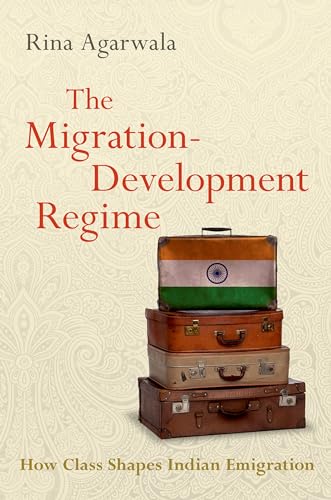
| 304.8 BAU Strangers at our door / | 304.8 COL Exodus : How migration is changing our world | 304.8 GOL Migration matters : | 304.80954 AGA The migration-development regime : how class shapes Indian emigration / | 304.80954 KUM Migrants, mobility and citizenship in India / | 304.80954 MIS Internal migration in contemporary India | 304.80954 REM Migration in South Asia : Poverty and Vulnerability, SAAPE Poverty and Vulnerability Report / |
Migration-development regimes (MDRs) -- The rise and fall of the coolie MDR (1834-1947) : racialized class exploitation -- The rise and fall of the nationalist MDR (1947-1977) : erasing the Indian emigrant -- The CEO MDR (1977-present) : liberalizing emigration and tapping emigrants' financial contributions -- The CEO MDR : tapping elite emigrants' ideological contributions and forging an elite class pact of "global Indians" -- Experiencing the CEO MDR from below : poor emigrants -- Experiencing the CEO MDR from below : elite emigrants -- Vulnerabilities in the CEO MDR and a future trajectory.
How can we explain global migration from the perspective of sending states and migrants? The Migration-Development Regime introduces a novel analytical framework to answer this question in India, the world’s largest emigrant exporter and largest remittance-receiving country. Drawing on archives, a new database of transnational migrant organizations, and unique interviews with poor and elite emigrants, recruiters, and government officials, this book exposes how the Indian state, as well as poor and elite emigrants, have long forged and legitimized class inequalities within India through their management of international emigration. Since the 1800s, the Indian state has sometimes forbidden and sometimes promoted emigration. And Indian emigrants have sometimes brought material and sometimes ideological inflows to India. But throughout, the Indian state has differentially used poor and elite emigrants to accelerate domestic economic growth and retain political legitimacy by imposing different regulations, acquiring different benefits, and making different pacts with different classes of emigrants. At the same time, poor and elite emigrants since the 1900s have differentially resisted and reshaped Indian emigration practices and development agendas. By taking this long and class-based view, this book recasts contemporary migration not simply as a problematic function of “neoliberalism” or as a development panacea for sending countries, but as a dynamic historical process that sending states and migrants have long tried to manage. In doing so, it redefines the primary problems of migration, exposes the material and ideological impact that migration has on sending-state development, and isolates what is truly novel about contemporary migration.