

Library Catalogue
| Item type | Current library | Shelving location | Call number | Materials specified | Status | Notes | Barcode | |
|---|---|---|---|---|---|---|---|---|
 BOOKs
BOOKs
|
NLS | General Stacks | 345.540902 MCC (Browse shelf(Opens below)) | HB | Available | Recommended by Mr. Kunal Ambasta | 40410 |

|

|

|

|

|
|
|
||
| 345.54056 KHU - 2 Taking bail seriously : the state of bail jurisprudence in India / | 345.540772 KHA Crime, punishment and due sentence : judicial approach to guilt in criminal justice / | 345.540772 VIB Transforming Higher Education : A Journey into New Dimensions / | 345.540902 MCC Trials of sovereignty : Mercy, violence, and the making of criminal law in British India, 1857–1922 / | 345.591 CHA Criminal law in Sri Lanka / | 345.591 CHA-1 Criminal Law in Sri Lanka / | 345.591 CHA-2 Criminal Law in Sri Lanka / |
List of Figures and Tables -
Acknowledgements -
List of Abbreviations -
Introduction -
1. Forgetting War and Punishing Crime -
2. The Peace: The Queen's Proclamation and the Politics of Forgiveness -
3. The Code: Judges, Juries and Punishing Difference -
4. Discretion, the Death Penalty, and the Criminal Trial -
5. Pardons and Scaffolds -
6. Tilak's Radical Innocence: Mercy, Sedition, and the State Trial -
7. Gandhi's Guilt and the Return of War -
Conclusion -
Epilogue -
Select Bibliography -
Index.
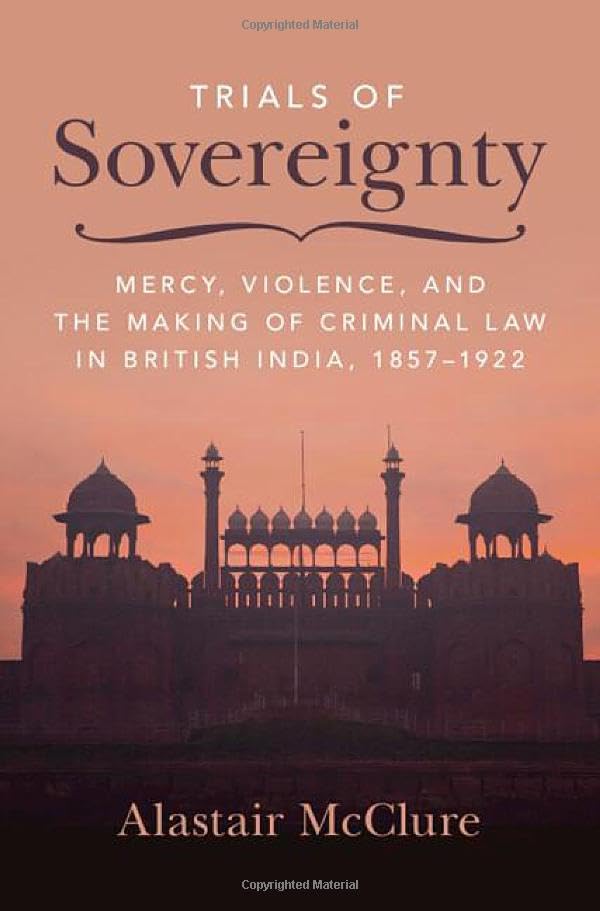
Trials of Sovereignty offers the first legal history of mercy and discretion in nineteenth and twentieth-century India. Through a study of large-scale amnesties, the prerogative powers of pardon, executive commutation, and judicial sentencing practices, Alastair McClure argues that discretion represented a vital facet of colonial rule. In a bloody penal order, officials and judges consistently offered reduced sentences and pardons for select subjects, encouraging others to approach state institutions and confer the colonial state with greater legitimacy. Mercy was always a contested expression of sovereign power that risked exposing colonial weakness. This vulnerability was gradually recognized by colonial subjects who deployed a range of legal and political strategies to interrogate state power and question the lofty promises of British colonial justice. By the early twentieth century, the decision to break the law and reject imperial overtures of mercy had developed into a crucial expression of anticolonial politics.
Demonstrates how mercy and terror were related expressions of sovereign power and explores the unevenness of state violence across the Indian social order
Provides social and political context for powerful institutions, codes, and courts that will be useful for historians and legal scholars interested in modern South Asia
Presents vital historical context and analysis for a hugely contentious issue in contemporary Indian politics