

Library Catalogue
| Item type | Current library | Shelving location | Call number | Materials specified | Status | Notes | Barcode | |
|---|---|---|---|---|---|---|---|---|
 BOOKs
BOOKs
|
NLS | Circulation Counter | 354.54 MAT (Browse shelf(Opens below)) | HB | Available | Recommended by Dr. Anindita Adhikari | 40889 |
1:Introduction -
2:The Existing Narratives of India's Public Service Delivery Challenges -
3:History of Public Financial Management Reforms -
4:Architectural Challenges in India's Public Financial Management -
5:Consequences of Public Financial Management Architecture on Public Service Delivery -
6:Public Financial Management: From Good to Great -
7:Outcomes of Proposed Changes in the Architecture -
8:Institutionalizing Improvements in Public Finance Management -
9:Conclusion: Risks and Opportunities -
Appendix 1:Learning from Existing Systems in India -
Appendix 2:Learning from Existing Systems in Latin America -
Appendix 3:Beyond-the-Last-Mile Connectivity -
Appendix 4:Eligibility Criteria in Programme-Specific Platforms -
Appendix 5:Personal Account.
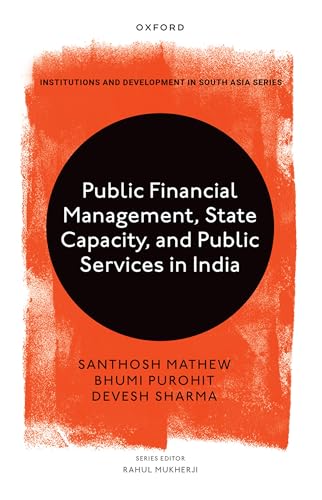
Even when public programmes are well-funded and well-designed, why do they fail to deliver? While existing research in political economy has identified various challenges affecting public service delivery, Public Financial Management, State Capacity, and Public Services in India unveils a critical, yet often overlooked factor: the architecture of public finance, particularly expenditure management systems. Drawing from existing literature, field experience, and primary data from government officials and citizens, Mathew, Purohit, and Sharma provide a compelling analysis of how India's public finance management system contributes to pervasive governance challenges. The book proposes a series of innovative changes, termed 'on-demand architecture', that aim to provide both funds and real-time data about those funds to effectively improve India's public finance management and responsiveness of service providers to citizens, civic society, and other stakeholders. By reimagining public finance beyond its traditional accounting and auditing function, the book presents a transformative framework for expanding India's expenditure capacity and enhancing public service delivery.