

NLSUI OPAC header image
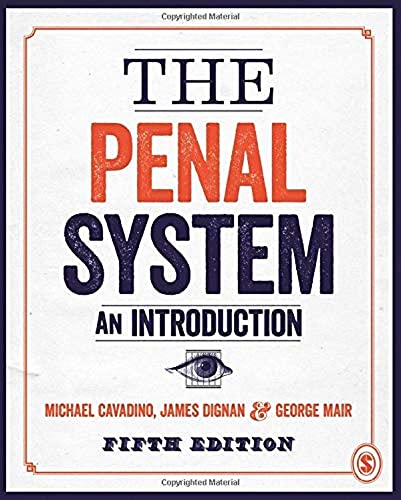
Amazon cover image
Image from Amazon.com

The penal system : An introduction

By: Contributor(s): Publication details: London Sage Publications 2013Edition: 5thDescription: 298p illISBN:
  • 9781446207253
Subject(s): DDC classification:
  • 365.000000 CAV
Contents:
Table of contents Preface; Companion Website; Introduction; The Criminal Justice System; The Penal Crisis and Strategies for Criminal Justice; Notes on Terminology: 'Punishment' and 'System'; Crisis? What Crisis?; Is there a Crisis?; The Orthadox Account of the Crisis; The High Prison Population (The Numbers Crisis); Overcrowding; Bad Conditions; Understaffing; Staff Unrest; 'Toxic Mix' of Prisoners; Riots and Disorder; Criticisms of the Orthodox Account; Improving on the Orthadox Account; The Crisis of Penological Resources; The Crisis of Visibility; The Crisis of Legitimacy; Responses to the Crisis; A Radical Pluralist Account of the Crisis; Justifying Punishment; Is Punishment Unjust?; Reductivism; Deterrence; Incapacitation; Reform; Just Deserts: Retributivism and Denunciation; Retributivism; Denunciation; Restorative Justice; Schools of Penal Thought; The Classical School: Deterrence and the Tariff; Bentham and Neo-Classicism: Deterrence and Reform; Positivism: The Rehabilitative Ideal; The Justice Model: Just Deserts and Due Process; From Just Deserts to the New Punitiveness - and Beyond?; Philosophies, Strategies and Attitudes; Conclusions: Punishment and Human Rights; Explaining Punishment; The Sociology of Punishment; The Marxist Tradition; Economic Determinism: Rusche and Kirchheimer; Ideology and Hegemony: The Legacy of Gramsci; Structuralist Marxism and Althusser; Post-Structuralism, Discipline and Power: Michel Foucault; Humanistic Materialism: The Case of E. P. Thompsom; The Durkheimian Tradition; The Weberian Tradition; Pluralism and Radical Pluralism; Applying Penal Sociology; The New Penology and The New Punitiveness; Comparative Penology and the New Punitiveness; Sentencing: The Crux of the Crisis; The Crux of the Crisis; Who Are the Sentencers?; Constraints on the Powers of Sentencers; Judical Independence and Traditional English Sentencing; Confining Discretion; Checking Discretion: Appeals; Structuring Discretion: Principles and Guidelines; The Current Legal Framework of Sentencing; A Brief, Tangled Recent History of Sentencing; 1991: From the Strategy of Encouragement to Just Deserts; 1992-97: The Law and Order Counter-Reformation; New Labour, Mixed Messages; Coalition False Dawn; A Rational Approach? Punishment in the Community; Community Punishment in a Rapidly Changing Penal Landscape; Non-Custodial Punishment: the Current Sentencing Framework; Nominal and Warning Penalties; Financial Penalties; Compensatory Penalties; Reparative Penalties and Restorative Justice Approaches; Supervisory Penalties and the Changing Role of the Probation Service; Community Payback (Community Service or Unpaid Work); Surveillance and Restrictions on Movement: Curfews and Electronic Monitoring; 'Hybrid Penalties'; Community Punishment: Strategic Issues; Changing Penal Strategies and their Impact on the Use of Imprisonment and Community Punishment; Enforcement of Community Sentences: Sticks or Carrots?; 'Sentence Management' and the Changing Role of the Judiciary; Effectiveness of Community Sentences; Contestability and Privatization; Shifting Patterns of Penality: Theoretical Reflections; Scull's 'Decarceration' Thesis; Cohen and Mathiesen: the 'Dispersal of Discipline' Thesis; Bottoms' 'Juridical Revival' Thesis; Conclusion: The Future of Punishment?; Prisons and the Penal Crisis; Overview; The Aims and Functions of Imprisonment; Official Aims of Imprisonment; Social Functions of Imprisonment; The Prison System; The Prisons and the Prisoners; Privatization; The Debate Around Prison Privatization; Privatization and the Crisis of Resources; Key Phases in Recent Prison Policy-Making; 1995-1999: The Security and Control Agenda - Post-Woolf Backlash; 1999-2002: 'Decency Agenda' and 'Effectiveness Credo' - The Quest for a Balanced Approach; 2002-2006: Keeping the Lid On - Pragmatism Reasserts Itself; 2006-2012: Where do we go From Here?; The Prison System and its Crises; The Managerial Crisis; The Crises of Containment and Security; The Prison Numbers Crisis and the Problem of Overcrowding; The Crisis of Conditions; The Crises of Control and Authority; The Crisis of Accountability; The Crisis of Legitimacy and How to Tackle it; Early Release: The Penal System's Safety Valve; Early Release: Useful, Controversial, Troublesome; History of Early Release; From Remission to Automatic Early Release; Parole (Discretionary Early Release); Early Release Today; Fixed-term (Determinate) Sentences; Extended Sentences (Extended Determinate Sentences); Life Imprisonment and Imprisonment for Public Protection; The Parole Board; Conclusion: Early Release Evaluated; The Youth Justice System; Young People, Crime and the Penal Crisis; Responding to Youth Crime: Models of Youth Justice; The Welfare Model; The Justice Model; Minimum Intervention and Systems Management; The Restorative Justice Model; Neo-Correctionalism; Neo-Correctional Youth Justice, 1997; Responding to Youth Crime: the Youth Justice System in Operation; Concluding Assessment: No More Excuses?; Bias in the Criminal Justice System; Introductory; Class; Race; Gender; Solving the Crisis?; A Grim Fairy Tale; Responses to the Crisis, 1970-2006; From Positivism to Law and Order with Bifurcation: 1970-1987; Just Deserts and Punishment in the Community: 1987-1992; Law and Order Reinvigorated: 1993-1997; 'Tough On Crime, Tough On the Causes of Crime': New Labour, 1997-2010; Coalition False Dawn: 2010 Onwards; How to Solve the Crisis; Approaches to the Penal Crisis; Measures to Solve the Crisis; The Prospects; Glossary of Key Terms; References; Index
Star ratings
    Average rating: 0.0 (0 votes)
Holdings
Item type Current library Call number Status Barcode
BOOKs NLS 365 CAV (Browse shelf(Opens below)) Available 30640

Table of contents
Preface;
Companion Website;
Introduction;
The Criminal Justice System;
The Penal Crisis and Strategies for Criminal Justice;
Notes on Terminology: 'Punishment' and 'System';
Crisis? What Crisis?;
Is there a Crisis?;
The Orthadox Account of the Crisis;
The High Prison Population (The Numbers Crisis);
Overcrowding;
Bad Conditions;
Understaffing;
Staff Unrest;
'Toxic Mix' of Prisoners;
Riots and Disorder;
Criticisms of the Orthodox Account;
Improving on the Orthadox Account;
The Crisis of Penological Resources;
The Crisis of Visibility;
The Crisis of Legitimacy;
Responses to the Crisis;
A Radical Pluralist Account of the Crisis;
Justifying Punishment;
Is Punishment Unjust?;
Reductivism;
Deterrence;
Incapacitation;
Reform;
Just Deserts: Retributivism and Denunciation;
Retributivism;
Denunciation;
Restorative Justice;
Schools of Penal Thought;
The Classical School: Deterrence and the Tariff;
Bentham and Neo-Classicism: Deterrence and Reform;
Positivism: The Rehabilitative Ideal;
The Justice Model: Just Deserts and Due Process;
From Just Deserts to the New Punitiveness - and Beyond?;
Philosophies, Strategies and Attitudes;
Conclusions: Punishment and Human Rights;
Explaining Punishment;
The Sociology of Punishment;
The Marxist Tradition;
Economic Determinism: Rusche and Kirchheimer;
Ideology and Hegemony: The Legacy of Gramsci;
Structuralist Marxism and Althusser;
Post-Structuralism, Discipline and Power: Michel Foucault;
Humanistic Materialism: The Case of E. P. Thompsom;
The Durkheimian Tradition;
The Weberian Tradition;
Pluralism and Radical Pluralism;
Applying Penal Sociology;
The New Penology and The New Punitiveness;
Comparative Penology and the New Punitiveness;
Sentencing: The Crux of the Crisis;
The Crux of the Crisis;
Who Are the Sentencers?;
Constraints on the Powers of Sentencers;
Judical Independence and Traditional English Sentencing;
Confining Discretion;
Checking Discretion: Appeals;
Structuring Discretion: Principles and Guidelines;
The Current Legal Framework of Sentencing;
A Brief, Tangled Recent History of Sentencing;
1991: From the Strategy of Encouragement to Just Deserts;
1992-97: The Law and Order Counter-Reformation;
New Labour, Mixed Messages;
Coalition False Dawn;
A Rational Approach?
Punishment in the Community;
Community Punishment in a Rapidly Changing Penal Landscape;
Non-Custodial Punishment: the Current Sentencing Framework;
Nominal and Warning Penalties;
Financial Penalties;
Compensatory Penalties;
Reparative Penalties and Restorative Justice Approaches;
Supervisory Penalties and the Changing Role of the Probation Service;
Community Payback (Community Service or Unpaid Work);
Surveillance and Restrictions on Movement: Curfews and Electronic Monitoring;
'Hybrid Penalties';
Community Punishment: Strategic Issues;
Changing Penal Strategies and their Impact on the Use of Imprisonment and Community Punishment;
Enforcement of Community Sentences: Sticks or Carrots?;
'Sentence Management' and the Changing Role of the Judiciary;
Effectiveness of Community Sentences;
Contestability and Privatization;
Shifting Patterns of Penality: Theoretical Reflections;
Scull's 'Decarceration' Thesis;
Cohen and Mathiesen: the 'Dispersal of Discipline' Thesis;
Bottoms' 'Juridical Revival' Thesis;
Conclusion: The Future of Punishment?;
Prisons and the Penal Crisis;
Overview;
The Aims and Functions of Imprisonment;
Official Aims of Imprisonment;
Social Functions of Imprisonment;
The Prison System;
The Prisons and the Prisoners;
Privatization;
The Debate Around Prison Privatization;
Privatization and the Crisis of Resources;
Key Phases in Recent Prison Policy-Making;
1995-1999: The Security and Control Agenda - Post-Woolf Backlash;
1999-2002: 'Decency Agenda' and 'Effectiveness Credo' - The Quest for a Balanced Approach;
2002-2006: Keeping the Lid On - Pragmatism Reasserts Itself;
2006-2012: Where do we go From Here?;
The Prison System and its Crises;
The Managerial Crisis;
The Crises of Containment and Security;
The Prison Numbers Crisis and the Problem of Overcrowding;
The Crisis of Conditions;
The Crises of Control and Authority;
The Crisis of Accountability;
The Crisis of Legitimacy and How to Tackle it;
Early Release: The Penal System's Safety Valve;
Early Release: Useful, Controversial, Troublesome;
History of Early Release;
From Remission to Automatic Early Release;
Parole (Discretionary Early Release);
Early Release Today;
Fixed-term (Determinate) Sentences;
Extended Sentences (Extended Determinate Sentences);
Life Imprisonment and Imprisonment for Public Protection;
The Parole Board;
Conclusion: Early Release Evaluated;
The Youth Justice System;
Young People, Crime and the Penal Crisis;
Responding to Youth Crime: Models of Youth Justice;
The Welfare Model;
The Justice Model;
Minimum Intervention and Systems Management;
The Restorative Justice Model;
Neo-Correctionalism;
Neo-Correctional Youth Justice, 1997;
Responding to Youth Crime: the Youth Justice System in Operation;
Concluding Assessment: No More Excuses?;
Bias in the Criminal Justice System;
Introductory;
Class;
Race;
Gender;
Solving the Crisis?;
A Grim Fairy Tale;
Responses to the Crisis, 1970-2006;
From Positivism to Law and Order with Bifurcation: 1970-1987;
Just Deserts and Punishment in the Community: 1987-1992;
Law and Order Reinvigorated: 1993-1997;
'Tough On Crime, Tough On the Causes of Crime': New Labour, 1997-2010;
Coalition False Dawn: 2010 Onwards;
How to Solve the Crisis;
Approaches to the Penal Crisis;
Measures to Solve the Crisis;
The Prospects;
Glossary of Key Terms;
References;
Index