

NLSUI OPAC header image
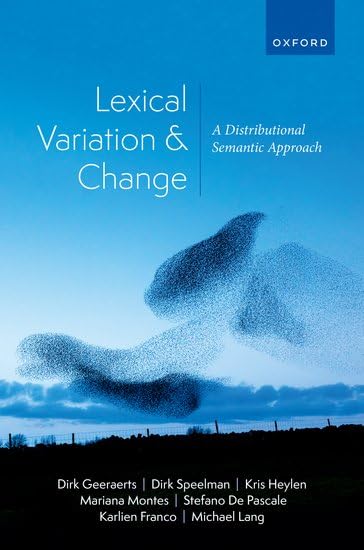
Amazon cover image
Image from Amazon.com

Lexical variation and change : a distributional semantic approach / Dirk Geeraerts, Dirk Speelman, Kris Heylen, Mariana Montes, Stefano De Pascale, Karlien Franco, Michael Lang.

By: Contributor(s): Publisher: New York : Oxford University Press, 2023Description: pages cmContent type:
  • text
Media type:
  • unmediated
Carrier type:
  • volume
ISBN:
  • 9780198890676
Online resources: Summary: "Distributional semantics embodies the idea that the context in which a word occurs reveals the meaning of that word. In contemporary corpus linguistics, that idea takes shape in various types of quantitative context analysis. This monograph explores how count-based token-level semantic vector spaces, as an advanced form of such a quantitative methodology, can be applied to the study of polysemy, lexical variation, and lectometry. What can distributional models reveal about meaning? How can they be used to analyse the semantic relationship between near-synonyms? And how can they contribute to the study of lexical variation as a sociolinguistic variable? The book details the conceptual background of lexical semantic and lexical variation research, explains the mechanism of distributional modelling, and introduces distributional workflows and corpus linguistic tools to answer the questions. Combining a cognitive linguistic interest in meaning with a sociolinguistic interest in variation, it illustrates that distributional methodology with case studies on Dutch and Spanish lexical data, focusing on the value of distributional models for semantic analysis, the interaction of semasiological and onomasiological change, and sociolinguistic issues of lexical standardization and pluricentricity"-- Provided by publisher.
Star ratings
    Average rating: 0.0 (0 votes)
Holdings
Item type Current library Status Barcode
Open Access Books - Publishers NLS Available OABP417

"Distributional semantics embodies the idea that the context in which a word occurs reveals the meaning of that word. In contemporary corpus linguistics, that idea takes shape in various types of quantitative context analysis. This monograph explores how count-based token-level semantic vector spaces, as an advanced form of such a quantitative methodology, can be applied to the study of polysemy, lexical variation, and lectometry. What can distributional models reveal about meaning? How can they be used to analyse the semantic relationship between near-synonyms? And how can they contribute to the study of lexical variation as a sociolinguistic variable? The book details the conceptual background of lexical semantic and lexical variation research, explains the mechanism of distributional modelling, and introduces distributional workflows and corpus linguistic tools to answer the questions. Combining a cognitive linguistic interest in meaning with a sociolinguistic interest in variation, it illustrates that distributional methodology with case studies on Dutch and Spanish lexical data, focusing on the value of distributional models for semantic analysis, the interaction of semasiological and onomasiological change, and sociolinguistic issues of lexical standardization and pluricentricity"-- Provided by publisher.