

Library Catalogue
| Item type | Current library | Shelving location | Call number | Materials specified | Status | Notes | Barcode | |
|---|---|---|---|---|---|---|---|---|
 BOOKs
BOOKs
|
NLS | Circulation Counter | 320.54 KRI (Browse shelf(Opens below)) | HB | Available | Recommended by Prof. Dr. Arun K Thiruvengadam | 40840 |
Introduction -
1. The National Flag: A Symbol of Freedom -
2. The Lion Capital: An Emblem for Justice -
3. Satyameva Jayate: An Old Truth for a New Motto -
4. Jana Gana Mana: A Song and an Anthem -
5. The Preamble: A Vision for che Republic -
Notes -
Selected Bibliography -
Index -
Acknowledgements.
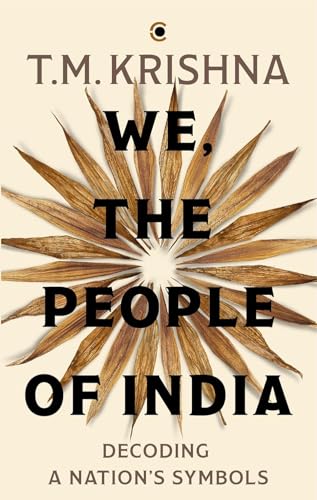
India’s independence came at the cost of millions of lives and deep psychological scars. As attempts were made to urgently stitch together the states and princely provinces that would eventually comprise the Republic of India, members of the Constituent Assembly and the newly formed government also debated the symbols—the national flag, anthem, emblem, motto and Preamble—that could represent the free people of the new nation and reinforce in them a sense of their own identity as citizens.
Not all of the processes and communications around this passage from idea to symbol were clearly documented. It is this lack of ready historical material that set musician and cultural commentator T.M. Krishna on a journey of discovery that shaped itself into this extraordinary book. Through meticulous research and persistent questioning, he found ways to explore the historical, cultural and philosophical contexts of each symbol, revealing how they evolved to become powerful metaphors for a nation’s aspirations, struggles and dreams for the future.
In tracing the origin and evolution of the tricolour with the chakra in the centre, the discussions about the significance of the lions on the Ashokan pillar capitals and the proclamations to be included in the Preamble to the Constitution of India, the debates around the adoption of the motto ‘Satyameva Jayate’ and Tagore’s Jana Gana Mana, leading up to the present controversy around Vande Mataram, Krishna invites readers to reconsider the significance of each of these symbols in contemporary India.
Written with a deep sincerity and analytical clarity, We, the People of India is an eloquent meditation on constitutionalism, freedom and the importance of effective representation in a complex, vibrant democracy. It is also, ultimately, a citizenly response to a nation in crisis.