

Library Catalogue
| Item type | Current library | Shelving location | Call number | Status | Notes | Barcode | |
|---|---|---|---|---|---|---|---|
 BOOKs
BOOKs
|
NLS | General Stacks | 378.001 HIG (Browse shelf(Opens below)) | Available | Recommended by Mr. Sidharth Chauhan | 40375 |
The series "Key Issues in Social Justice: Voices from the frontline" edited by Kalwant Bhopal et al.
Series editor's preface
List of figures
Notes on contributors
Acknowledgements
Preface
1 Unpacking disruptive methodologies: what do we know about lived experience-led knowledge and scholarship?
Introduction
Contextual notions of lived experience
Complexities of lived experience- led research
Decolonial aims
Lived experience- led knowledge and social justice research Lived experience- led methodologies
Writing process
Book structure
Chapter-by-chapter summaries
Positionalities
Caroline
Maree
Conclusion
Note
Further reading
PART I Theoretical grounding and underpinning values
2 Examining for the purpose of knowing: Ngaabigi Winhangagigu
Introduction
Uncle Stan's story
Deb and Donna's story
Teish and Yarri's story
Sue's story
Conclusion
Note
Further reading
References
3 Towards a scholarship of Critical Lived Experience Engagement: big feelings, big stories, big learning
Introduction Lived experience: power and problems
Passing for human
Learning from stories
Building a discipline: Critical Lived Experience Engagement
Conclusion
Acknowledgements
Further reading
References
PART II Scrutinising lived experience research processes through leadership and collaboration
4 Lived experience perspectives on a co-design process: the 'Under the Radar' men's suicide prevention project
Introduction
The process
Key lessons
Creative reflections
Under the radar
Anonymous
My three days at Bronte
Dear diary
So much to learn
Pay attention Up boy
My only friend the end
Be understanding towards me before trying to understand me
An open letter to the health-care workers of Australia
Art is my voice
Oubliette
Conclusion
Acknowledgements
Notes
Further reading
References
5 Co-researching with persons with disabilities: reflections and lessons learned
Introduction
Our collaboration processes
What did we wish to achieve through co-research?
Persons with disabilities are actively involved in research
Persons with disabilities can meaningfully participate in all stages of research What worked well and why?
Previous collaboration with, and existing capacity, of co-researchers with disabilities
Reasonable accommodation and coordination could support participation of Persons with Disabilities
Persons with Disabilities managed to successfully collect data and build rapport with the informants
What was challenging and why?
Navigating the imbalance of power relations between ASB and Persons with Disabilities
Accessibility issues due to environmental and communicational barriers experienced during data collection
Language barriers
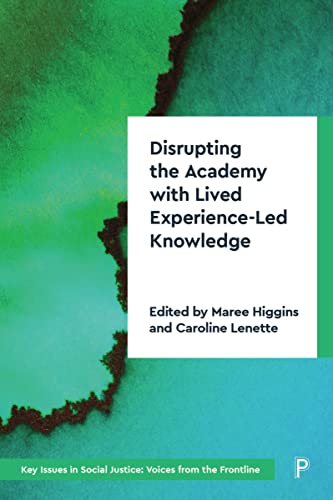
By exploring a range of social justice issues from first-hand perspectives, this book reframes our understanding of knowledge production. It demonstrates that when lived experience experts lead the way, their knowledge can enrich, transform and decolonise research, teaching and advocacy