

NLSUI OPAC header image
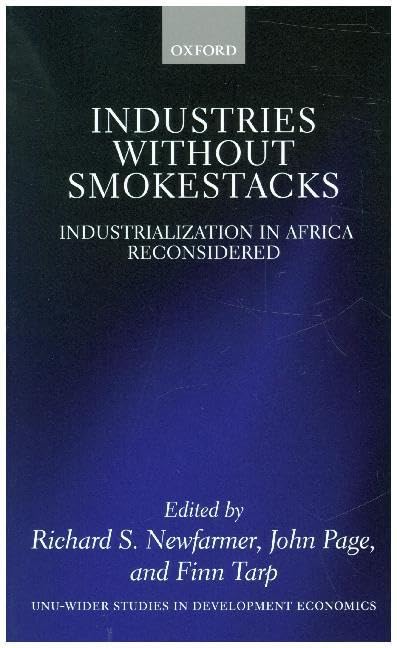
Amazon cover image
Image from Amazon.com

Industries without smokestacks : industrialization in Africa reconsidered / edited by Richard S. Newfarmer, John Page, and Finn Tarp.

Contributor(s): Series: WIDER studies in development economicsPublisher: Oxford, United Kingdom : Oxford University Press, 2018Description: xx, 451 pages : illustrations, maps ; 25 cmContent type:
  • text
Media type:
  • unmediated
Carrier type:
  • volume
ISBN:
  • 0198821883
  • 9780198821885
Subject(s): Online resources: By 2030 more than three quarters of the world's absolute poor are projected to live in Africa. Accelerating economic growth is key to rising incomes on the continent, and central to this challenge is establishing activities that are capable of employing large numbers of unskilled workers, that can raise productivity through innovation, and that can power growth through exports. Such structural transformation is a key driver of growth, and between 1950-1996 about half of the economic catch-up by developing countries (led by East Asia) was due to rising productivity in manufacturing combined with growing agricultural output. Africa, however, has lagged behind.0In 2014, the average share of manufacturing in GDP in sub-Saharan Africa hovered around 10 per cent, unchanged from the 1970s, leading some observers to be pessimistic about Africa's potential to catch the wave of sustained rapid growth and rising incomes. Industries Without Smokestacks: Industrialization in Africa econsidered challenges this view. It argues that other activities sharing the characteristics of manufacturing- including tourism, ICT, and other services as well as food processing and horticulture- are beginning to play a role analogous to that played by anufacturing in East Asia. This reflects not only changes in the global organization of industries since the early era of rapid East Asian growth, but also advantages unique to Africa. These 'industries without smokestacks' offer new opportunities for Africa to grow in coming decades.
Star ratings
    Average rating: 0.0 (0 votes)
Holdings
Item type Current library Status Barcode
Open Access Books - Publishers NLS Available OABP247

A study prepared by the United Nations University World Institute for Development Economics Research (UNU-WIDER)

Includes bibliographical references and index.

By 2030 more than three quarters of the world's absolute poor are projected to live in Africa. Accelerating economic growth is key to rising incomes on the continent, and central to this challenge is establishing activities that are capable of employing large numbers of unskilled workers, that can raise productivity through innovation, and that can power growth through exports. Such structural transformation is a key driver of growth, and between 1950-1996 about half of the economic catch-up by developing countries (led by East Asia) was due to rising productivity in manufacturing combined with growing agricultural output. Africa, however, has lagged behind.0In 2014, the average share of manufacturing in GDP in sub-Saharan Africa hovered around 10 per cent, unchanged from the 1970s, leading some observers to be pessimistic about Africa's potential to catch the wave of sustained rapid growth and rising incomes. Industries Without Smokestacks: Industrialization in Africa econsidered challenges this view. It argues that other activities sharing the characteristics of manufacturing- including tourism, ICT, and other services as well as food processing and horticulture- are beginning to play a role analogous to that played by anufacturing in East Asia. This reflects not only changes in the global organization of industries since the early era of rapid East Asian growth, but also advantages unique to Africa. These 'industries without smokestacks' offer new opportunities for Africa to grow in coming decades.