

NLSUI OPAC header image
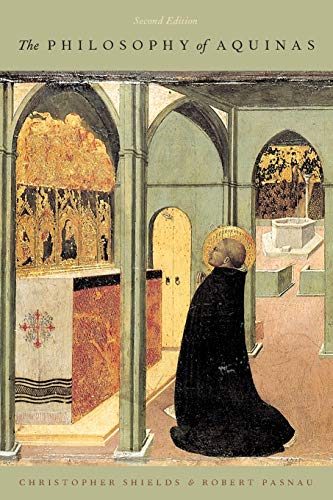
Amazon cover image
Image from Amazon.com

The philosophy of Aquinas / Christopher Shields and Robert Pasnau.

By: Contributor(s): Publisher: New York, NY : Oxford University Press, 2016Edition: Second EditionDescription: xii, 322 pages ; 23 cmContent type:
  • text
Media type:
  • unmediated
Carrier type:
  • volume
ISBN:
  • 9780199301249 (pbk. : alk. paper)
Subject(s): DDC classification:
  • 189.4
Contents:
Preface; 1 Life and Work; 1.1 Early Years; 1.2 A Young Scholar; 1.3 Master of Theology; 1.4 Back to Italy; 1.5 A Second Term in Paris; 1.6 Breakdown; 2 Aquinas's Explanatory Framework: The Four Causes; 2.1 Introducing the Four Causes; 2.1.1 Matter and Form; 2.1.2 The Efficient Cause; 2.1.3 The Final Cause; 2.1.4 The Four Causes Reviewed and Briefly Illustrated; 2.2 The Four Causes Developed and Articulated; 2.2.1 Mutual Priority; 2.2.2 Priority Among the Causes; 2.2.3 Proximate and Non-Proximate Causes; 2.2.4 Causal Coincidence; 2.2.5 Incidental Causes; 2.3 Conclusions; 3 Aquinas's Metaphysical Framework: Being and Essence; 3.1 Beings and Essences; 3.2 Material Substances; 3.2.1 First Qualification; 3.2.2 Second Qualification; 3.2.3 Third Qualification; 3.3 Immaterial Substances; 3.4 Substance and Accidents; 3.5 Universals; 3.5.1 Qualitative Sameness; 3.5.2 Numerical Sameness; 3.6 Conclusions; 4 God's Existence and Nature; 4.1 Our Knowledge of God; 4.2 Phase One: God's Existence; 4.2.1 The Proof from Motion; 4.2.2 The Proof from Degrees of Truth; 4.3 Phase Two: God's Nature; 4.3.1 Absolute Simplicity; 4.3.2 From Intellect to Will; 4.4 Understanding God's Attributes: Analogical Predication; 4.5 Conclusions; 5 The Order of the Universe; 5.1 God's Power; 5.1.1 Creation; 5.1.2 Omnipotence and Creation; 5.1.3 The Beginning of the Universe; 5.2 The Created Order; 5.3 Providence; 5.3.1 Conservation; 5.3.2 Necessity and Freedom; 5.4 Conclusions; 6 The Human Soul and the Human Body; 6.1 The Special Status of Human Beings; 6.2 Soul as a Principle of Life; 6.3 Souls and Bodies: Hylomorphism; 6.4 Against Reductive Materialism; 6.5 Against Platonism; 6.6 A Difficult Intermediary; 6.7 Soul as Subsistent; 6.8 Where in the Body Is the Soul?; 6.9 Conclusions; 7 Sense and Intellect; 7.1 The Nature of Cognition; 7.2 The Cognitive Powers; 7.2.1 Sensation; 7.2.2 The Immateriality of Cognition; 7.2.3 An Argument for the Intellect's Immateriality; 7.3 Cognitive Functions; 7.3.1 The Objects of Intellect; 7.3.2 Abstraction; 7.3.3 Illumination; 7.3.4 Concept Formation; 7.4 Conclusions; 8 The Goal of Human Life; 8.1 Introduction; 8.2 That There Is a Human End; 8.3 Happiness; 8.4 What Happiness Is Not; 8.5 What Happiness Is; 8.6 The Beatific Vision; 8.7 Conclusions; 9 Ethics; 9.1 Overview; 9.2 Natural Law; 9.2.1 Nature and Eternal Law; 9.2.2 Natural Inclinations; 9.2.3 The Passions; 9.3 Virtue; 9.3.1 The Need for Virtue; 9.3.2 The Perfection of Virtue; 9.3.3 Prudence; 9.4 Conclusions; Glossary; Catalog of Works; Index.
Star ratings
    Average rating: 0.0 (0 votes)
Holdings
Item type Current library Shelving location Call number Materials specified Status Notes Barcode
BOOKs NLS General Stacks 189.4 SHI (Browse shelf(Opens below)) PB Lost and Paid For Recommended by Prof. Dr. Nigam N S 39163

Includes bibliographical references and index.

Preface;
1 Life and Work;
1.1 Early Years;
1.2 A Young Scholar;
1.3 Master of Theology;
1.4 Back to Italy;
1.5 A Second Term in Paris;
1.6 Breakdown;
2 Aquinas's Explanatory Framework: The Four Causes;
2.1 Introducing the Four Causes;
2.1.1 Matter and Form;
2.1.2 The Efficient Cause;
2.1.3 The Final Cause;
2.1.4 The Four Causes Reviewed and Briefly Illustrated;
2.2 The Four Causes Developed and Articulated;
2.2.1 Mutual Priority;
2.2.2 Priority Among the Causes;
2.2.3 Proximate and Non-Proximate Causes;
2.2.4 Causal Coincidence;
2.2.5 Incidental Causes;
2.3 Conclusions;
3 Aquinas's Metaphysical Framework: Being and Essence;
3.1 Beings and Essences;
3.2 Material Substances;
3.2.1 First Qualification;
3.2.2 Second Qualification;
3.2.3 Third Qualification;
3.3 Immaterial Substances;
3.4 Substance and Accidents;
3.5 Universals;
3.5.1 Qualitative Sameness;
3.5.2 Numerical Sameness;
3.6 Conclusions;
4 God's Existence and Nature;
4.1 Our Knowledge of God;
4.2 Phase One: God's Existence;
4.2.1 The Proof from Motion;
4.2.2 The Proof from Degrees of Truth;
4.3 Phase Two: God's Nature;
4.3.1 Absolute Simplicity;
4.3.2 From Intellect to Will;
4.4 Understanding God's Attributes: Analogical Predication;
4.5 Conclusions;
5 The Order of the Universe;
5.1 God's Power;
5.1.1 Creation;
5.1.2 Omnipotence and Creation;
5.1.3 The Beginning of the Universe;
5.2 The Created Order;
5.3 Providence;
5.3.1 Conservation;
5.3.2 Necessity and Freedom;
5.4 Conclusions;
6 The Human Soul and the Human Body;
6.1 The Special Status of Human Beings;
6.2 Soul as a Principle of Life;
6.3 Souls and Bodies: Hylomorphism;
6.4 Against Reductive Materialism;
6.5 Against Platonism;
6.6 A Difficult Intermediary;
6.7 Soul as Subsistent;
6.8 Where in the Body Is the Soul?;
6.9 Conclusions;
7 Sense and Intellect;
7.1 The Nature of Cognition;
7.2 The Cognitive Powers;
7.2.1 Sensation;
7.2.2 The Immateriality of Cognition;
7.2.3 An Argument for the Intellect's Immateriality;
7.3 Cognitive Functions;
7.3.1 The Objects of Intellect;
7.3.2 Abstraction;
7.3.3 Illumination;
7.3.4 Concept Formation;
7.4 Conclusions;
8 The Goal of Human Life;
8.1 Introduction;
8.2 That There Is a Human End;
8.3 Happiness;
8.4 What Happiness Is Not;
8.5 What Happiness Is;
8.6 The Beatific Vision;
8.7 Conclusions;
9 Ethics;
9.1 Overview;
9.2 Natural Law;
9.2.1 Nature and Eternal Law;
9.2.2 Natural Inclinations;
9.2.3 The Passions;
9.3 Virtue;
9.3.1 The Need for Virtue;
9.3.2 The Perfection of Virtue;
9.3.3 Prudence;
9.4 Conclusions;
Glossary;
Catalog of Works;
Index.