

NLSUI OPAC header image
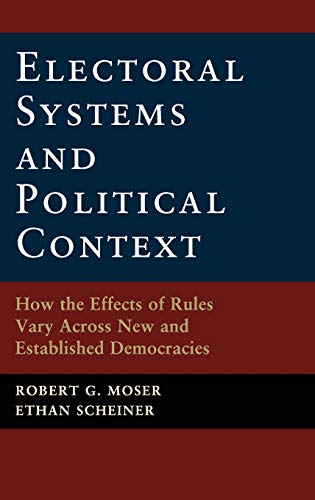
Amazon cover image
Image from Amazon.com

Electoral systems and political context : how the effects of rules vary across new and established democracies / Robert G. Moser,

By: Contributor(s): Publisher: Cambridge : Cambridge University Press, [2012]Description: vii, 284 p. : illustrations ; 24 cmISBN:
  • 9781107025424 (pbk.)
Subject(s): DDC classification:
  • 324.6 MOS
Contents:
1. Introduction: why don't electoral rules have the same effects in all countries?; 1. When do the effects of electoral systems diverge from our expectations?; 2. Mixed-member electoral systems: how they work and how they work for scholars; 3. How democratic experience and party system development condition the effects of electoral rules on disproportionality and the number of parties: theory, measurement, and expectations; 4 . How democratic experience and party system development condition the effects of electoral rules on disproportionality and the number of parties: what we actually see; 5. Political context, electoral rules, and their effects on strategic and personal voting; 6. How democratic experience and party system development condition the effect of electoral rules on strategic defection; 7. Social diversity, electoral rules, and the number of parties; 8. How political context shapes the effect of electoral rules on women's representation; 9. Conclusion: why and how political context matters for electoral system effects.
Star ratings
    Average rating: 0.0 (0 votes)
Holdings
Item type Current library Shelving location Call number Status Barcode
BOOKs NLS On Display 324.6 MOS (Browse shelf(Opens below)) Not For Loan 30302

1. Introduction: why don't electoral rules have the same effects in all countries?;
1. When do the effects of electoral systems diverge from our expectations?; 2. Mixed-member electoral systems: how they work and how they work for scholars;
3. How democratic experience and party system development condition the effects of electoral rules on disproportionality and the number of parties: theory, measurement, and expectations;
4 . How democratic experience and party system development condition the effects of electoral rules on disproportionality and the number of parties: what we actually see;
5. Political context, electoral rules, and their effects on strategic and personal voting;
6. How democratic experience and party system development condition the effect of electoral rules on strategic defection;
7. Social diversity, electoral rules, and the number of parties;
8. How political context shapes the effect of electoral rules on women's representation;
9. Conclusion: why and how political context matters for electoral system effects.