

Library Catalogue
| Item type | Current library | Shelving location | Call number | Materials specified | Status | Notes | Barcode | |
|---|---|---|---|---|---|---|---|---|
 BOOKs
BOOKs
|
NLS | General Stacks | 343.0721 WHI (Browse shelf(Opens below)) | PB | Available | Recommended by Dr. Siddharth Narrain | 40465 |
Introduction -
1. Overview -
2. The economics of antitrust -
3. The ethics of economics -
4. Rights -
5. Antitrust violations and rights -
6. Harms and wrongs -
7. The obligation to maximize welfare -
8. Re-envisioning the market.
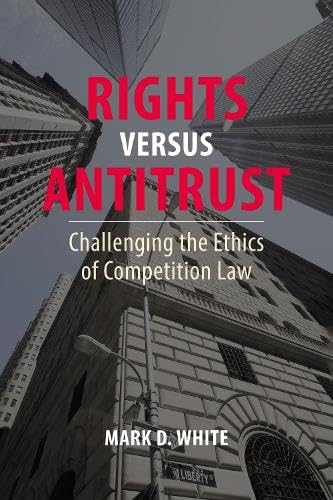
Antitrust or competition law is widely considered an essential part of the legal and political structures of most liberal democracies and an integral foundation of a market economy. In this book, Mark D. White disputes this understanding, drawing on concepts from economics, philosophy, and law to argue that the pre-eminent status accorded to the regulation of competition should be reconsidered by any government that claims to support basic property rights.
Despite its populist origins, antitrust is usually understood today in terms of economic theory, which provides a solid foundation for the analysis of market competition. As this logic goes, governments restrict firms from engaging in behaviour regarded as uncompetitive, with the purpose of protecting consumers, other firms, or the very process of competition itself. However, this neglects the fundamental property rights on which the market economy is based, an unfortunate implication of the utilitarian ethics at the heart of economics. Firms are held responsible for promoting societal welfare and penalized for failing to do so, even when their actions violate no recognized rights of consumers or competitors. This view of commerce sees firms as agents of the state rather than opportunities for individuals to pursue their interests in exchange with others. As White explains, competition or antitrust law serves as an example of how economics privileges welfare and efficiency over rights and justice, promoting the maximization of outcomes while ignoring the rights of those who generate them.
Accessible and non-technical, this book assumes no previous knowledge of economics, philosophy, or law, and provides a fresh and thought-provoking perspective on antitrust and competition law that will challenge readers from all backgrounds and political stances to question the degree to which its wisdom is taken for granted.